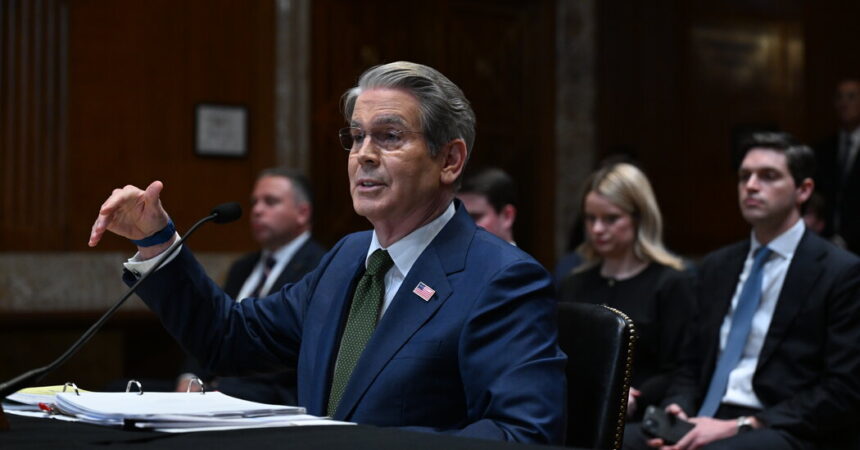
Treasury Secretary Scott Bessent expressed support on Wednesday for a potential economic aid initiative involving a currency swap with the United Arab Emirates, an oil-rich ally facing significant economic challenges due to the ongoing war in Iran. During a Senate hearing, Bessent indicated that the Emirates, together with several other nations across the Persian Gulf and Asia, had approached the U.S. regarding the feasibility of such a swap arrangement.
Bessent emphasized that initiating a currency swap could play a crucial role in averting disorderly sales of U.S. assets, particularly as countries seek to secure their access to dollars amid the economic turmoil caused by the conflict in Iran. The war has severely disrupted oil and gas infrastructure throughout the Middle East, consequently impacting economies reliant on the Strait of Hormuz for transporting crude oil globally.
He elaborated that facilitating a currency swap with the Emirates could yield reciprocal benefits for the United States by helping to stabilize foreign exchange markets and safeguarding American assets internationally. He noted that this initiative could be executed either through the Federal Reserve or the Treasury Department, which has the authority to utilize its Exchange Stabilization Fund to purchase foreign currencies.
“Swap lines, whether it’s from the Federal Reserve or the Treasury, are fundamental for maintaining order in the dollar funding markets and preventing disorganized sales of U.S. assets,” Bessent remarked. He reiterated that a swap line would serve the interests of both the U.A.E. and the U.S.
The proposed currency swap would involve the United States purchasing dirhams, the currency of the Emirates, thereby allowing the nation easier access to dollars for conducting its oil-related transactions.
However, not all lawmakers were in agreement. Senator Chris Van Hollen, a Maryland Democrat, raised concerns regarding the implications of providing economic support to the Emirates, noting potential conflicts of interest given President Trump’s personal financial connections to the region. Van Hollen criticized the administration’s military endeavors in Iran, asserting that the war has proven costly and counterproductive to U.S. safety and stability.
Bessent refrained from disclosing the identities of other nations that had sought financial assistance. He did reference a prior instance where the Treasury Department executed a $20 billion currency swap through the Exchange Stabilization Fund to support Argentina’s economy last year, reflecting the fund’s capacity to affect international financial circumstances.
As of February, this fund had a net balance of approximately $44 billion, granting Bessent considerable discretion over its use. It remains uncertain how much financial assistance the Emirates might necessitate or if assistance is even needed, given that the Emirati currency is pegged to the dollar and the nation’s central bank boasts substantial reserves despite the ongoing disruptions to oil exports caused by the war in Iran.