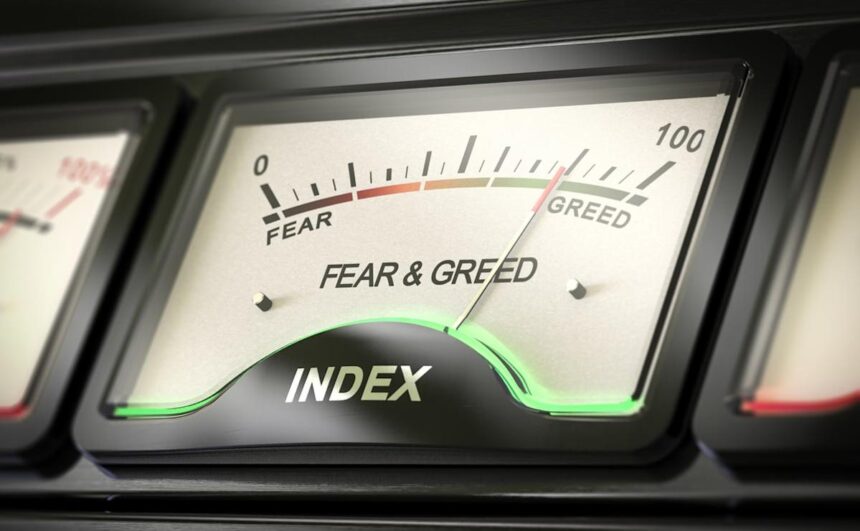
In recent weeks, the stock market has experienced a notable resurgence, fueled by a shift in investor sentiment that has swung from extreme fear to greed. This emotional pivot is a stark reminder of how psychological factors can play a significant role in market dynamics, often overriding analytical assessments based on financial reports and valuation metrics.
The CNN Fear and Greed Index illustrates this sentiment transformation, indicating a rise of 55 points over the last month, and reaching a current level of 70. The index, composed of seven key indicators such as the performance of the S&P 500 against its 125-day moving average, the number of 52-week highs and lows, as well as the ratio of put options to call options, reflects heightened investor confidence.
Renowned investor Warren Buffett once advised to be fearful when others are greedy and greedy when others are fearful, suggesting that the elevated fear and greed index rating may be seen as a potential sell signal. However, navigating the complexities of the market is rarely straightforward. An immediate spike in the index can signify that stocks are becoming overvalued, yet market sentiment often promotes upward movement for an extended period, driven by the fear of missing out (FOMO) among investors.
Despite the current optimism, caution lingers due to the uncertain geopolitical climate, particularly with the ongoing tensions in the Middle East. With President Trump advocating for a peace deal related to the conflict in Iran, the terms of any agreement remain ambiguous. Moreover, the S&P 500 is trading at a high price-to-earnings ratio of 28, raising concerns about unsustainable valuations amid existing headwinds such as a fragile labor market and risks associated with artificial intelligence.
Historically, the fear and greed index has identified opportunities for savvy investors. Past instances of extreme fear, notably in April after the reversal of Liberation Day tariffs, created advantageous buying scenarios as markets later surged. Conversely, extreme greed, which briefly appeared in November 2021, preceded a market downturn, illustrating that high market sentiment can be a double-edged sword.
Investors are encouraged to approach current stock purchases with a discerning eye, particularly the S&P 500 Index. Analysis from The Motley Fool’s Stock Advisor suggests that there may be more lucrative opportunities available, as they have pinpointed ten stocks poised for significant growth in the coming years, distinct from the index itself.
In summary, the interplay between fear and greed continues to shape market conditions, underscoring the importance of emotional awareness in investment decision-making. Keeping a balanced perspective, alongside monitoring sentiment indicators, will be crucial as the market navigates these volatile waters.