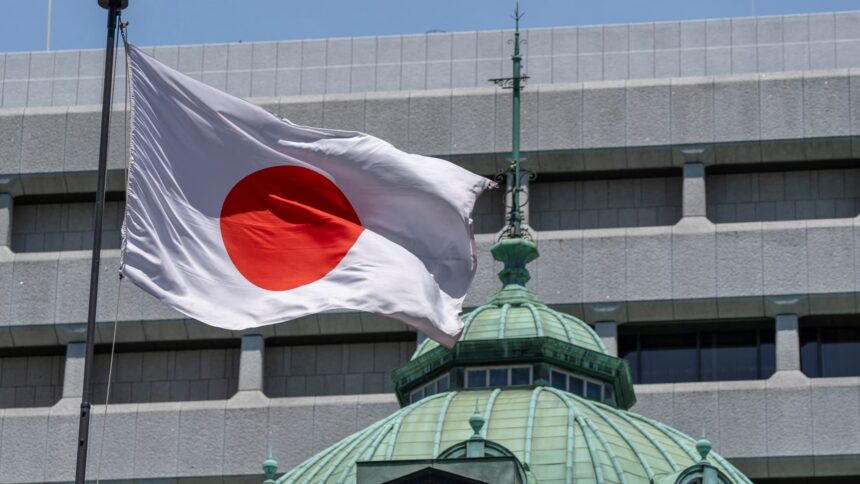
Japan’s central bank has raised its policy interest rate to 1%, marking the highest level in over three decades. This decision, announced on Tuesday, aligns with economic forecasts from a recent Reuters poll and signifies the continuation of the BOJ’s policy normalization efforts that commenced earlier this year. It is noteworthy that this is the first rate hike since December, when rates were increased to 0.75%, and the first time rates have reached the 1% threshold since 1995.
The Board of Governors’ decision to hike the rate was not unanimous; it passed with a split vote of 7-1. Board member Toichiro Asada cast the lone dissenting vote, advocating to maintain the rate at 0.75%.
The BOJ’s tightening measures come amid Japan’s ongoing struggles with a depreciating yen and rising inflation, facets that have been exacerbated, in part, by geopolitical tensions such as the Iran war. In the wake of the BOJ’s announcement, the benchmark Nikkei 225 rose by 0.46%, while the yen appreciated slightly to 160.22 against the U.S. dollar. Additionally, yields on the 10-year Japanese Government Bonds increased by 3 basis points to reach 2.615%.
In its statement, the central bank indicated that consumer inflation has remained below the 2% target, thanks largely to government initiatives aimed at mitigating the burden of soaring energy costs for households. The BOJ noted that inflation could see upward pressure as business-to-business price pass-throughs influenced by higher crude oil prices appear to be spreading, affecting consumer prices broadly.
Data from May showed that Japan’s producer price index registered a 6.3% increase, marking the fastest growth in over three years, largely driven by rising energy costs. Analysts believe that while the rate hike was anticipated, the decisive support from BOJ members highlighted a shift in focus towards addressing inflation concerns rather than prioritizing economic growth.
Tai Hui, the APAC chief market strategist at J.P. Morgan Asset Management, commented that expectations of a reopening in the Strait of Hormuz have alleviated some supply shock uncertainties, thereby bolstering the BOJ’s confidence in resuming its policy normalization.
The weak performance of the yen further justified the rate increase. Following reported interventions costing 11.7 trillion yen ($73.5 billion) in May, the currency remained weak, fluctuating around the 160 level against the dollar throughout June. Jesper Koll, an expert at Tokyo’s Monex Group, remarked that intervening in foreign exchange markets without adjusting domestic monetary policy is an ineffective strategy, likening it to pressing the brakes while accelerating.
While a weak yen boosts the competitiveness of Japanese exports, it adds to imported inflation, putting additional strain on government finances as it seeks to cushion the impact of rising prices through subsidies. Prime Minister Sanae Takaichi’s administration recently approved a supplementary budget of 3 trillion yen to help households cope with surging energy costs, following its initial budget earlier this year.
Interestingly, core inflation in Japan eased to 1.4% in April, resulting in its lowest level since March 2022. Analysts noted that this dip in inflation is largely attributable to various government-led initiatives aimed at suppressing inflationary pressures, which included waiving the gasoline tax and providing free education for high school students. As Japan grapples with these economic challenges, the BOJ’s recent policy changes signal a calculated shift in its approach to monetary policy amidst a complex landscape.