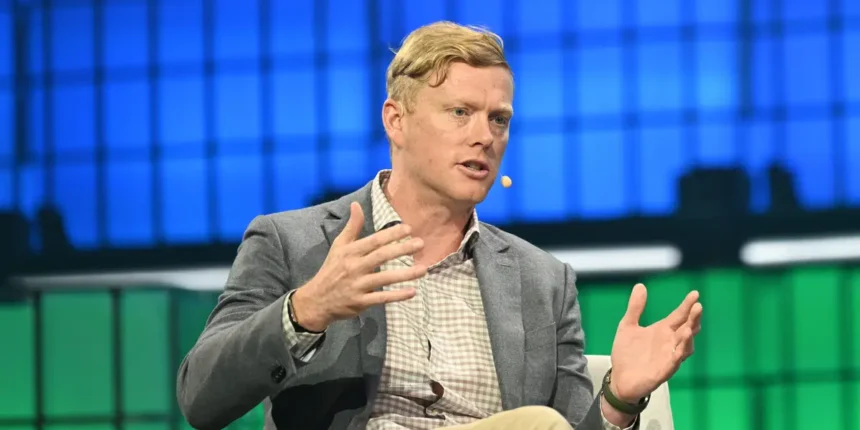
Silicon Valley is witnessing a significant backlash against the practice of “tokenmaxxing,” which refers to the strategy of maximizing token usage in artificial intelligence (AI) to enhance productivity. This trend has been highlighted by recent statements from Uber COO Andrew Macdonald, who expressed skepticism about the productivity gains stemming from increased AI token utilization. In an interview that garnered over two million views on X, Macdonald questioned the direct correlation between token consumption and tangible improvements in output, stating, “That link is not there yet, right? I think maybe implicitly there is more that is getting shipped, but it’s very hard to draw a line between one of those stats and, ‘OK, now we’re actually producing 25% more useful consumer features.'”
Tokens, the fundamental units processed by AI chatbots, constitute approximately three-quarters of a word each. Major corporations across the US are heavily investing in AI, with firms like Meta referring to some employees as “AI builders” and organizing them into AI-centered teams. Notably, companies such as Disney and JPMorgan are tracking their employees’ usage of AI, and Visa has even implemented incentive structures to reward teams that expedite their workflow with this technology. The financial implications are startling; Visa reported a staggering monthly token expenditure nearing 2 trillion.
However, a growing cohort of tech professionals is sounding the alarm over the significant waste generated by this accelerated AI adoption. Reports indicate that Uber exhausted its entire annual AI budget within just the first four months of this year. Akshat Bubna, co-founder and CTO of AI startup Modal, voiced concerns on X, suggesting that “pretty sure 50% of internal token spend is completely useless, but right now it’s hard to know which 50%.” Similarly, engineering manager Karthik Hariharan emphasized that tokens have been utilized without any substantial return on investment, stating, “Tokens got burned for millions of dollars without any real significant ROI to show for it.”
The situation has gained further attention with Google CEO Sundar Pichai echoing these financial concerns during Google’s recent I/O conference. He revealed that many chief information officers have expressed worries regarding excessive spending on AI initiatives. Pichai cautioned, “I think the problem is going to get worse as we go through the year.”
The tension surrounding tokenmaxxing has bred fears that the AI bubble may be reaching its breaking point. Notable investor Michael Burry, famed for his prescient investment strategies, voiced his concerns on Monday, describing tokenmaxxing as a “crazy, rushed, temporary phase,” and flagged potential risks associated with Nvidia stock.
Yet, not everyone is dismissive of the practice. Garry Tan, CEO of the renowned investment firm Y Combinator, has embraced tokenmaxxing, asserting that the approach has been in use longer than many realize. A report from engineering intelligence company Jellyfish suggests that while there are significant disparities in token usage among developers, companies should reconsider how they incentivize AI consumption. The top 10% of users of Claude Code reportedly consume about 10 times as many tokens as the median developer but yield only about double the output. The report advises against rewarding or penalizing raw token consumption, emphasizing that costs should be more closely linked to measurable outcomes such as pull requests, which represent proposed code changes to collaborative projects.
As the AI landscape continues to evolve, the dialogue around efficient token usage and productivity remains critical, highlighting a multifaceted challenge for tech companies grappling with rapid technological advancement and financial accountability.