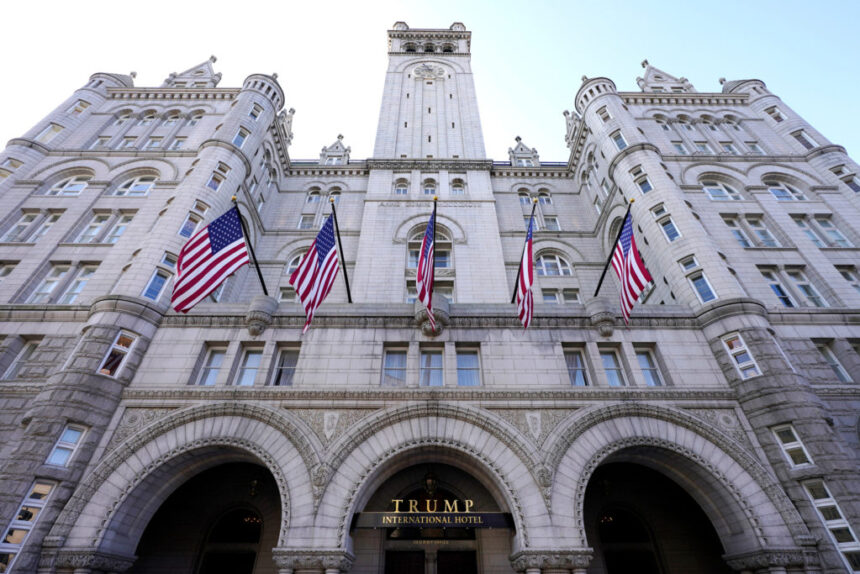
In a departure from long-standing practices among U.S. presidents, President Donald Trump is embracing a business-centric approach that raises significant ethical concerns. Historically, leaders such as Harry Truman, Richard Nixon, and George W. Bush refrained from profiting from their presidential roles, with Truman notably avoiding any business association even after leaving office. Nixon went so far as to monitor his family’s communications out of fear they might exploit political connections, while Bush divested his stock holdings before his presidency.
Under Trump’s leadership, however, the family real estate business is experiencing rapid international growth, with ventures potentially influencing U.S. policies on tariffs and military aid. This expansion is spearheaded by his sons, Eric and Donald Jr., who have made significant inroads into the cryptocurrency sector as well as securing stakes in companies that align with government interests, including an armed drone manufacturer seeking defense contracts.
Former Trump administration officials dismiss claims of ethical issues, with Donald Jr. labeling such inquiries as tiresome at a recent crypto conference. Critics, including historians and ethics experts, argue that the volume and nature of the business dealings are unprecedented and pose serious threats to democratic integrity.
The Trump Organization refrained from foreign deals during Trump’s first term but has pursued eight international deals in his second term, all while asserting compliance with self-imposed rules on foreign government dealings. However, there are indications that authoritarian regimes do interact closely with the Trump Organization. In Qatar, a Trump golf course and villa project is partly backed by a state-owned company. In Vietnam, government involvement has reportedly displaced farmers to facilitate a Trump resort, while in Saudi Arabia, a development project embodies close ties to the ruling family.
Despite the complexities surrounding these international ventures, the Trump Organization insists it operates within legal guidelines, citing that business relationships are with private companies rather than governmental entities.
The Trump family’s recent ventures in cryptocurrency have also drawn scrutiny. Notably, a deal struck shortly before Trump’s inauguration involved selling a stake in a crypto business to a UAE government-related company for an impressive $500 million. Such transactions raise questions about preferential treatment, especially as the administration later reversed restrictions, granting the UAE access to advanced U.S. technology.
The lucrative nature of the cryptocurrency market has also provided financial benefits to the Trump family, with several investments generating billions. Specific projects, such as governance tokens from their ventures, have raised significant funds, benefiting the family while raising ethical questions concerning anonymous political donations.
Amid this entrepreneurial environment, Trump’s personal wealth is reportedly surging, now estimated at $6.3 billion—an increase attributed to his administration’s influence. Though various past initiatives associated with the Trump name have failed commercially, the brand remains valuable in Washington, igniting interest from individuals and investors seeking proximity to power.
The current political landscape has not only blurred ethical lines for the Trump family but has also led to the emergence of memberships in exclusive clubs, charging substantial fees for access to influential networks.
While previous presidents faced scrutiny for potential conflicts, Trump’s approach, marked by overt financial dealings, seems to have shifted prevailing norms. Analysts warn of the precedent being set for future administrations, suggesting that the absence of accountability raises alarms about the integrity of democratic governance. Despite growing doubt among voters regarding ethical conduct, Trump maintains that public indifference allows for his actions.
As the administration continues to navigate its multifaceted business interests alongside governance, the situation highlights an evolving relationship between business and politics that may redefine the expectations of presidential conduct.