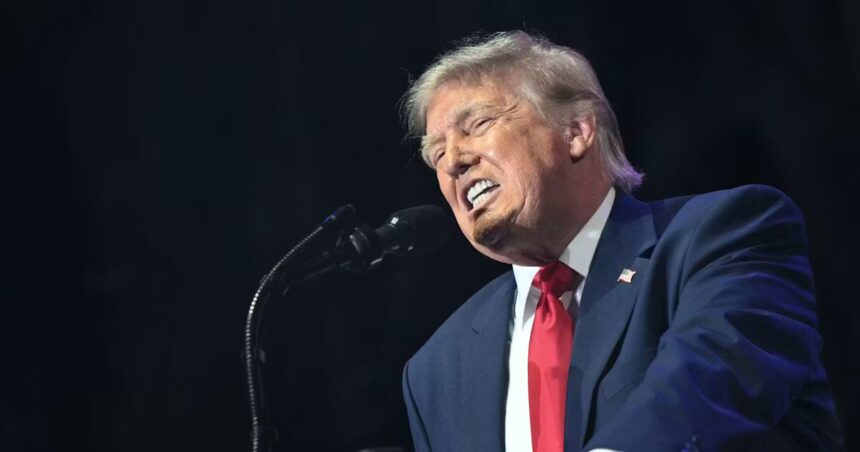
In a striking analysis of executive compensation trends, the focus has shifted to Shankh Mitra, the CEO of Welltower, a real estate investment trust specializing in senior housing and healthcare. Mitra’s remuneration of $821 million last year has drawn attention, particularly when compared to the staggering $2.2 billion accumulated by former President Donald Trump. This stark difference prompts a deeper examination of the ethical implications surrounding massive pay packages, especially when they are associated with industries that cater to individuals facing physical and mental decline.
While Mitra’s pay is indeed enormous, it falls short of Trump’s astronomical earnings, suggesting that the former president’s financial gains stem from activities rather than traditional labor or direct investment in operational capacities. The concept of a “rentier president” appears particularly relevant here, painting Trump as an individual whose wealth is derived from asset ownership rather than conventional work. Historically, rentiers, who profit primarily through their assets without active involvement in labor, have been linked to sectors like real estate and finance. Trump’s background in these areas is emblematic of this trend; starting with a wealthy upbringing, he took over the family business, transformed its focus, and later faced multiple bankruptcies despite initial successes.
Reflecting recent insights, the notion that a rentier presidency offers far greater financial returns than traditional rentier capitalism gains traction. Unlike conventional investments, becoming a rentier in the political sphere allows for significant profit without the need for upfront financial or labor commitments. The Trump family’s recent investment moves highlight this. Throughout the 2024 campaign, they secured a 60 percent stake in World Liberty Financial and were granted an impressive 75 percent share of net revenues from token sales—benefits that came without any outlay of personal capital. Subsequent adjustments saw their stake drop to 38 percent, yet the financial rewards remain significant. Notably, over $594 million was reported in earnings from these ventures last year alone.
Moreover, there are indications that Trump’s ventures into the cryptocurrency market, such as stakes in firms like ALT5 Sigma and American Bitcoin, do not appear to have required financial investment on his part. In fact, the deal with Celebration Coins alone reportedly brought in an estimated $636 million. These developments provoke further discourse about the intersection of wealth, politics, and ethics in the contemporary landscape, especially as the implications of wealth accumulation in the hands of a few raises questions about societal equity and moral responsibility.