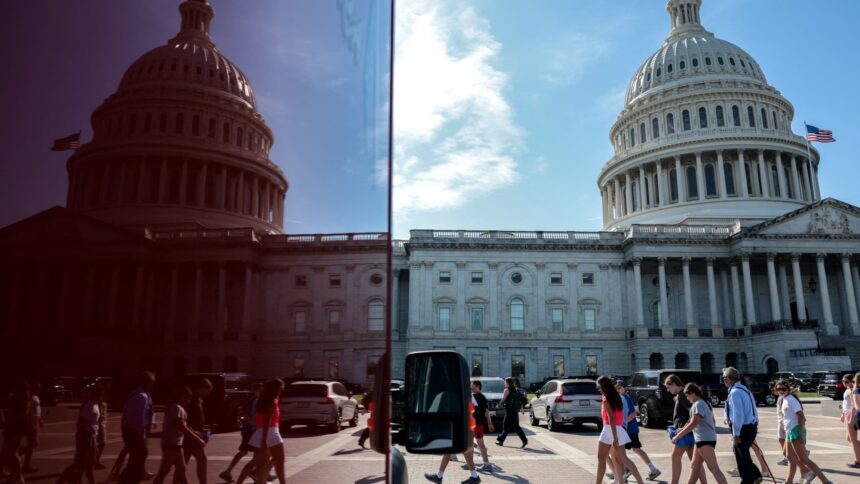
Tourists moved leisurely past the iconic U.S. Capitol on Capitol Hill in Washington, D.C., as the stock market experienced a significant rally, with the S&P 500 nearing record highs amid renewed optimism surrounding U.S.–Iran negotiations. Investors have focused on the prospect of a deal emerging between Washington and Tehran, with a White House official indicating that a second round of discussions is currently in the works. This market enthusiasm has propelled the S&P 500 to its ninth positive session out of ten, while the tech-heavy Nasdaq has notched an impressive ten consecutive gains.
Despite this rally, significant challenges loom on the horizon. Previous talks between U.S. and Iranian negotiators in Islamabad faced setbacks last weekend, leading to President Trump’s announcement of a blockade in the strategically vital Strait of Hormuz. This critical maritime route typically sees the passage of approximately 20% of the world’s oil supply. In response to the situation, over 10,000 U.S. sailors, Marines, and airmen, along with a flotilla of warships and various aircraft, have been deployed to enforce the blockade, which has severely limited traffic through the strait.
Tensions remain high as discussions regarding a ceasefire between the U.S. and Iran have been complicated by ongoing Israeli military actions in Lebanon. U.S. Secretary of State Marco Rubio has initiated direct talks between Israeli and Lebanese officials for the first time in decades, although the outcome of these negotiations remains uncertain.
The economic implications of the blockade are becoming increasingly apparent. Citadel CEO Ken Griffin has warned that continued disruption in the Strait of Hormuz could precipitate a global recession. Experts have also highlighted that Europe’s airline industry faces a potential “systemic” jet fuel shortage in the coming weeks if the blockade persists, which could result in widespread flight cancellations.
In the midst of these geopolitical tensions, U.S. Treasury Secretary Scott Bessent has criticized China, labeling it an unreliable global partner amidst the ongoing conflict. He accused the nation of stockpiling oil supplies and implementing export restrictions on certain products, heightening the sense of urgency in international economics.
In corporate developments, Meta and Broadcom announced an extension of their partnership aimed at the development of custom AI accelerators for Meta, which will last through 2029. In a separate note, Broadcom’s CEO Hock Tan has opted not to seek reelection to Meta’s board.
Meanwhile, a notable trend has emerged as central banks are now selling gold at levels not seen in recent years. Following extensive accumulation, some institutions are divesting their bullion holdings in response to financial pressures stemming from the conflict in the Middle East. Spot gold prices have dipped to around $4,838 per ounce, marking a 10% decline from earlier peaks. This shift is a striking contrast to last year’s performance, where central bank purchases contributed to price stability despite rising interest rates.
As global markets respond to these multifaceted challenges, investors remain hopeful yet cautious regarding the outcomes of ongoing negotiations and the broader economic landscape.